BlurDriving: Investigating How Personalized Blur Techniques Impact Drivers’ Performance in Virtual Reality
Abstract
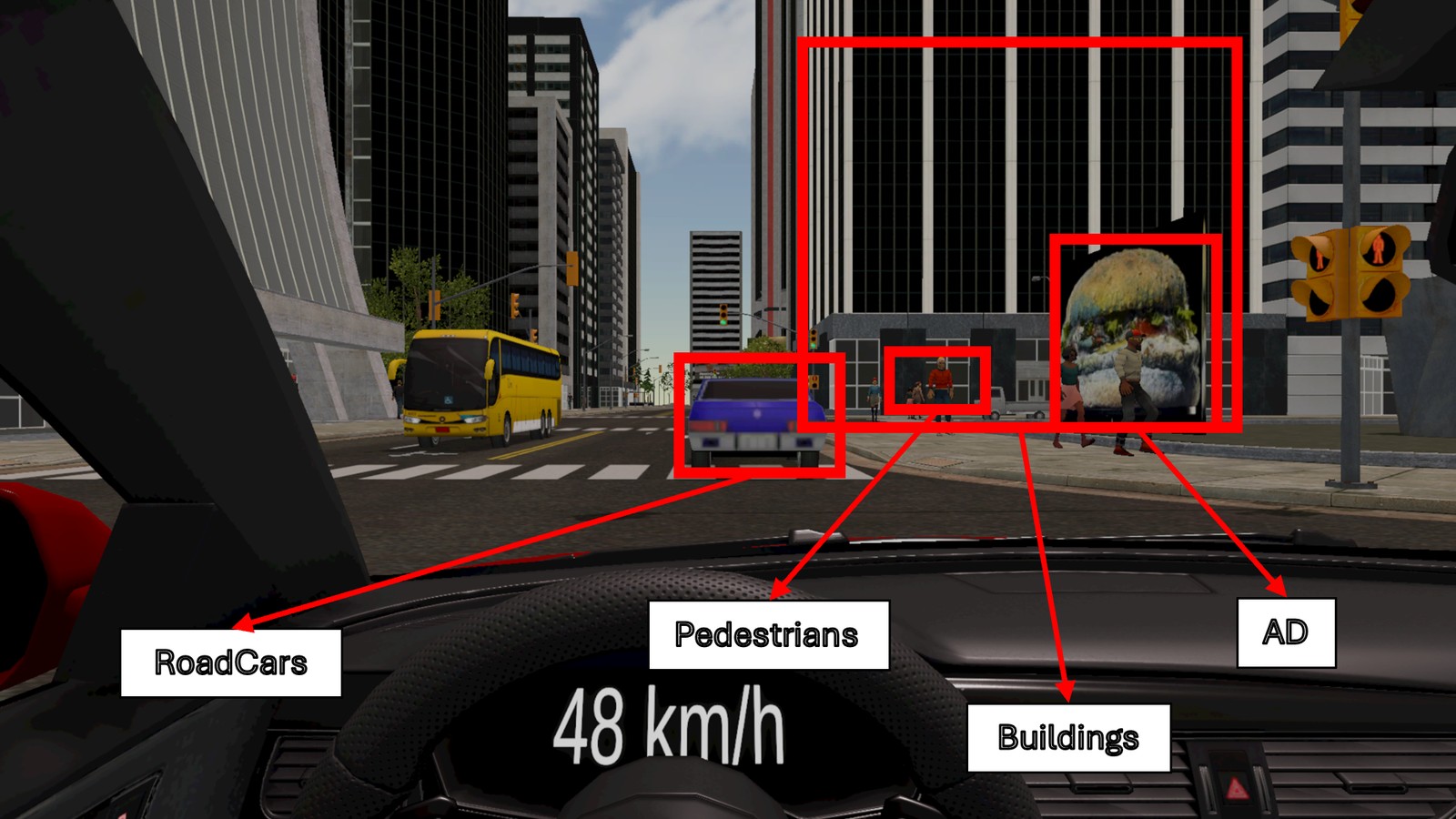
Virtual reality driving environments are increasingly used to study driver behavior, perception, and interaction with complex road scenes. BlurDriving investigates how personalized blur techniques affect drivers’ performance and visual attention by selectively modulating scene elements such as road cars, pedestrians, buildings, and automated-driving-related objects. Through this work, we examine how visual abstraction can shape attention allocation and driving behavior in simulated traffic environments.
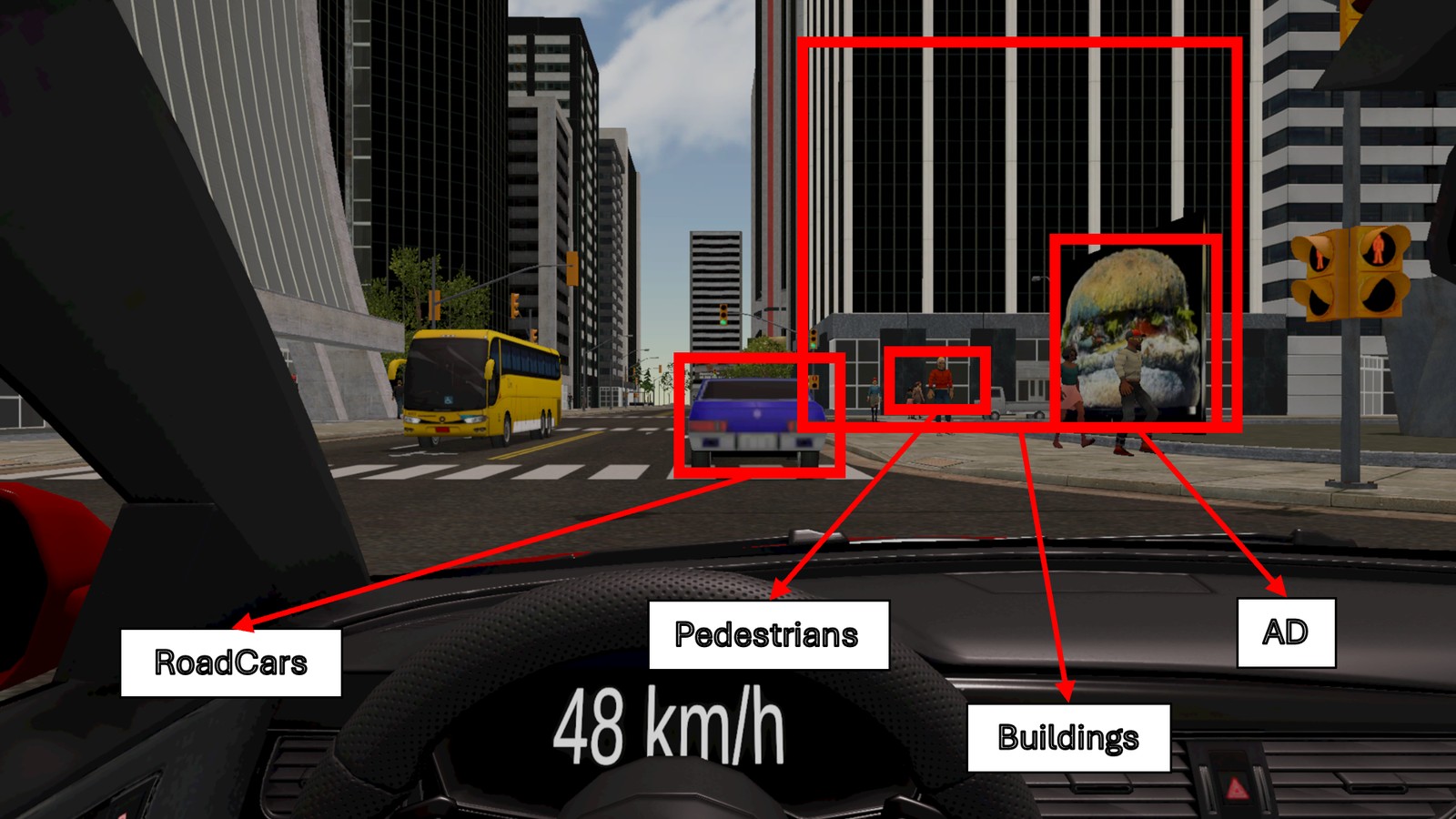
Personalized blur targets in a VR driving scene.
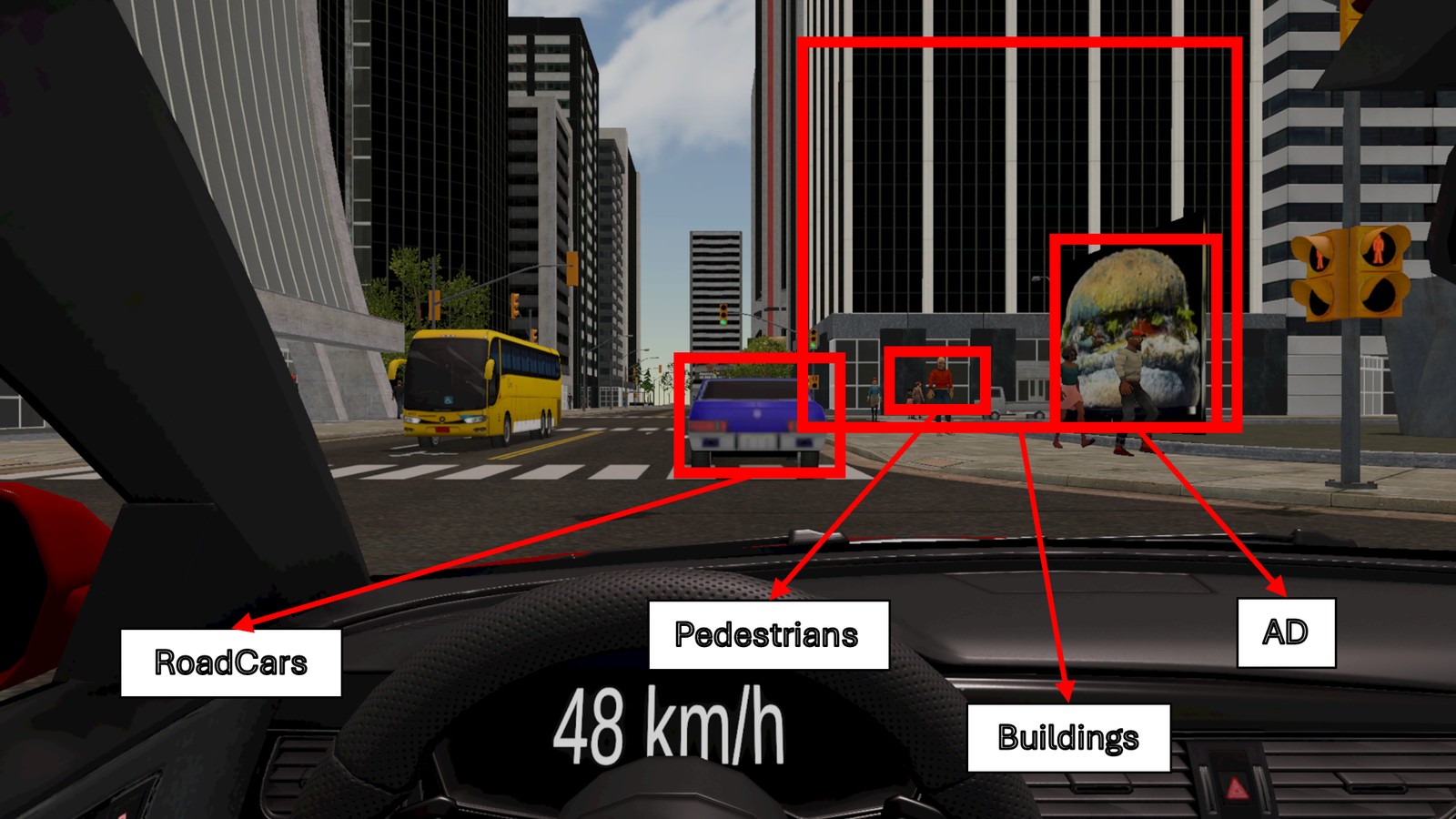
BlurDriving studies how different road-scene elements can be visually modulated.
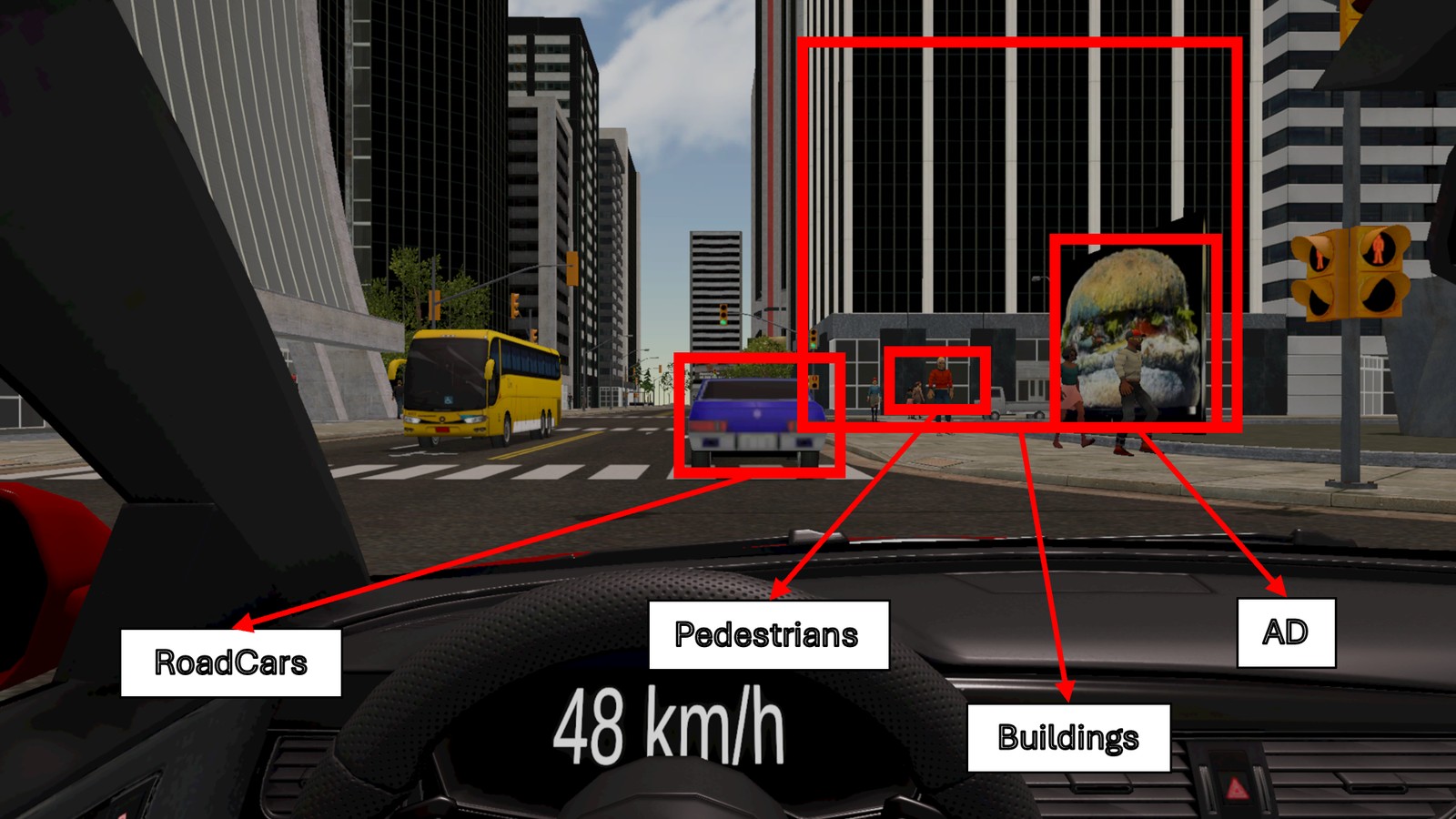
The system supports attention-focused manipulations in complex urban traffic environments.
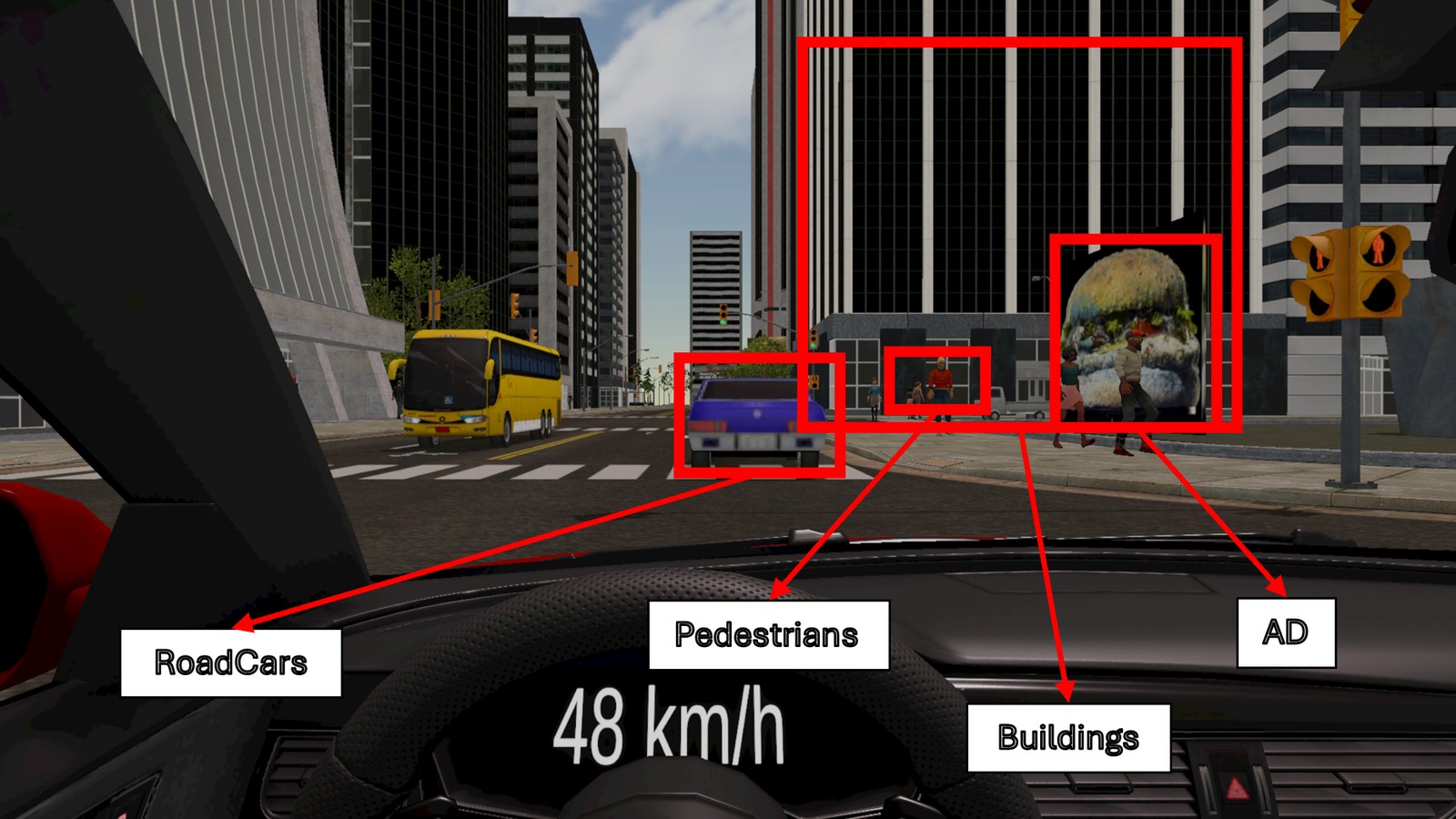
We examine the impact of blur-based visual abstraction on driving performance and perception.
BibTeX
@article{li2026blurdriving,
  title={BlurDriving: Investigating How Personalized Blur Techniques Impact Drivers' Performance in Virtual Reality},
  author={Li, Yuan and Colley, Mark and Gui, Xinyue and Rendon-Cardona, Cristian and Jansen, Pascal and Sandor, Christian and Igarashi, Takeo},
  journal={Proceedings of the ACM on Interactive, Mobile, Wearable and Ubiquitous Technologies},
  year={2026},
  note={Accepted with minor revision, to appear}
}